


1. Optimize Shopify product pages
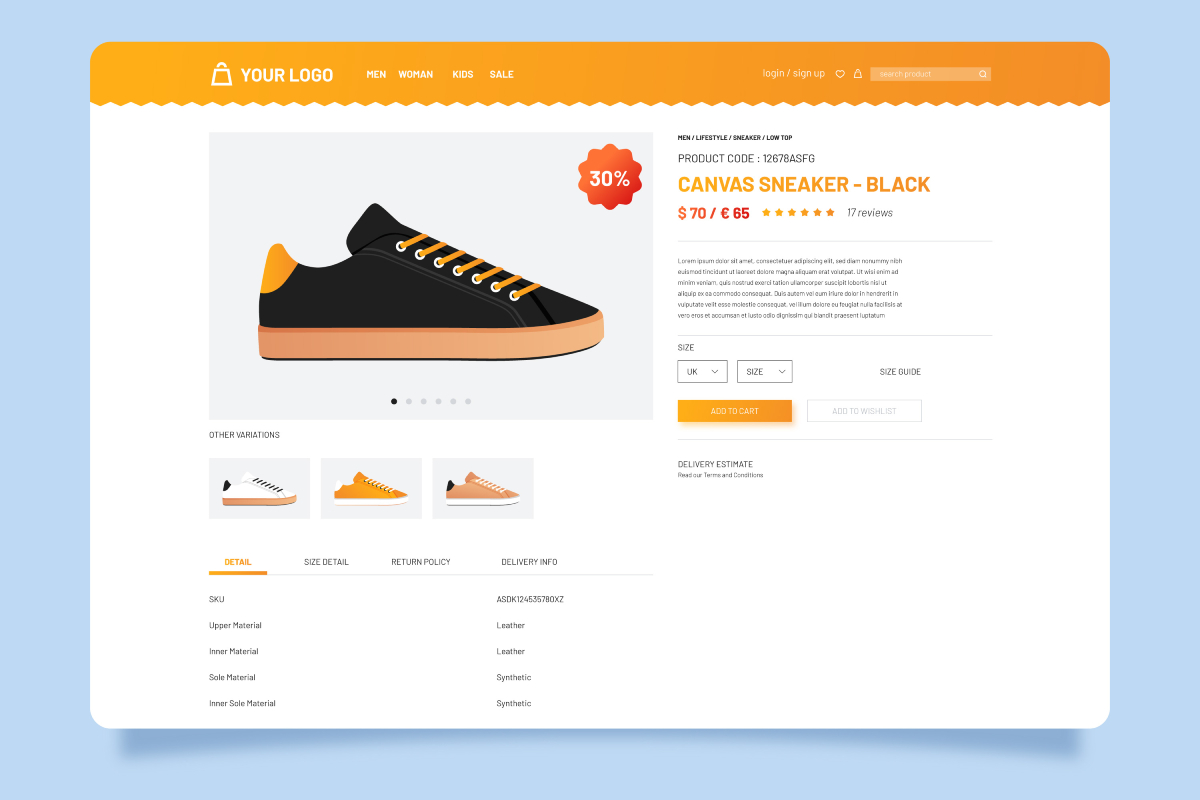
Product pages should be fully optimized for consumers and search engines as they are often the highest-intent pages on a Shopify store.
- Use high-quality product images from multiple angles, with zoom and lifestyle shots, to drive engagement and time on page.
- Write benefit-focused product descriptions that include your main and secondary keywords in a non-obvious way, explaining the problem & solution and why your offer is better than your competitors.
- Add social proof elements such as product reviews, star ratings, testimonials and user-generated content to encourage more conversions and instill trust.
- Optimize page speed with compressed graphics, clean code and fast hosting to minimize bounce rates and improve rankings.
2. Leverage email marketing for repeat sales

One of the highest-ROI channels for Shopify stores is email marketing, essential if you want to convert one-time visitors into customers who keep coming back.
- Create abandoned cart email flows to recoup lost revenue and return shoppers to finish their purchase.
- Build post-purchase sequences to thank customers, request reviews, deliver usage tips and recommend complementary products to increase lifetime value.
- Keep your brand top of mind with educational and strategically placed promotions in ongoing newsletters.
3. Improve Shopify user experience
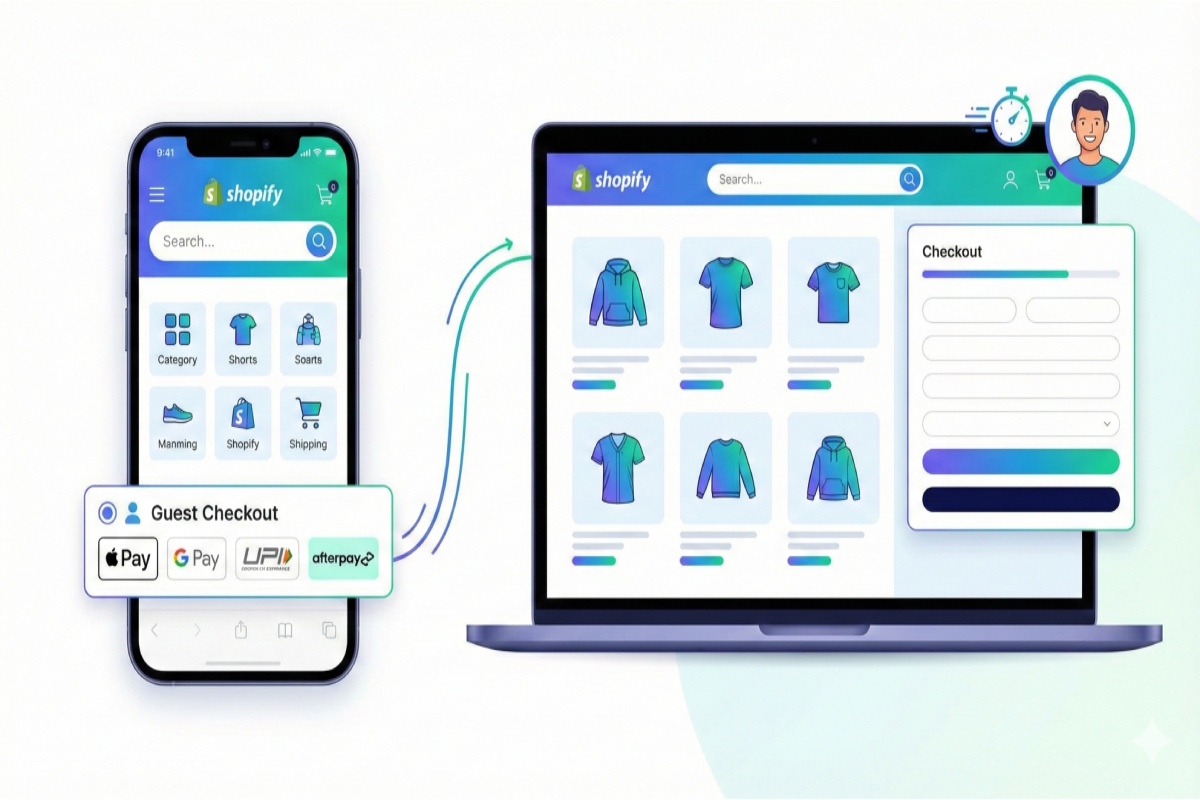
A smooth and convenient purchase process encourages repeat business and converts visitors!
- A HUGE portion of e-commerce traffic and sales now come from smart-phones so ensure your Shopify theme is fully mobile responsive
- Structure the navigation with clear categories, filters and search to help customers find what they’re looking for quickly.
- Minimize the form fields, guest checkout should be an option, and offer payment methods including wallets, UPI and buy now pay later to make your checkout easy.
4. Increase average order value (AOV)
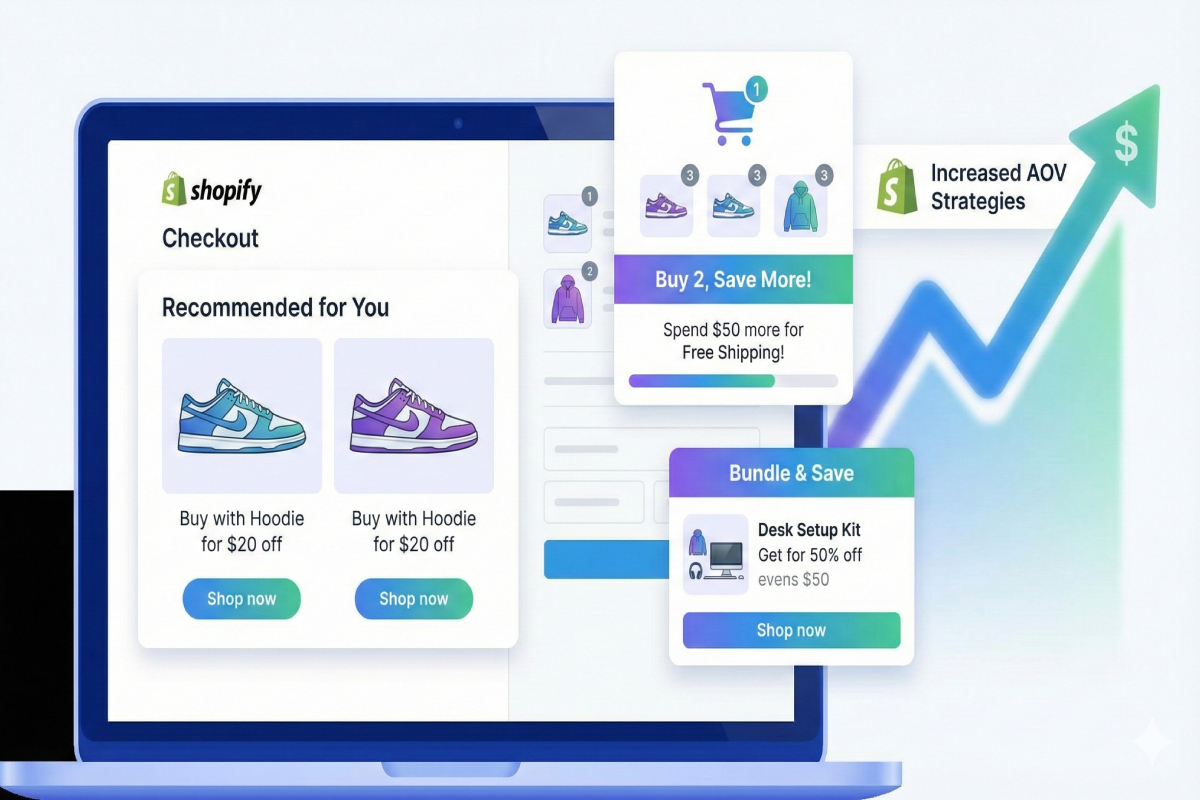
A Shopify store can boost revenue without raising traffic by increasing the average order value.
- Make the most of upsell and cross-sell offers to suggest related or more expensive products on product pages, in the basket & after a sale.
- Do so with bundles and volume discounts (i.e. Buy 2 or Buy 3 at a discounted cost per unit).
- To incentivize a customer to add more products, make your terms for free shipping slightly higher than your average order value currently is.
5. Strengthen Shopify SEO
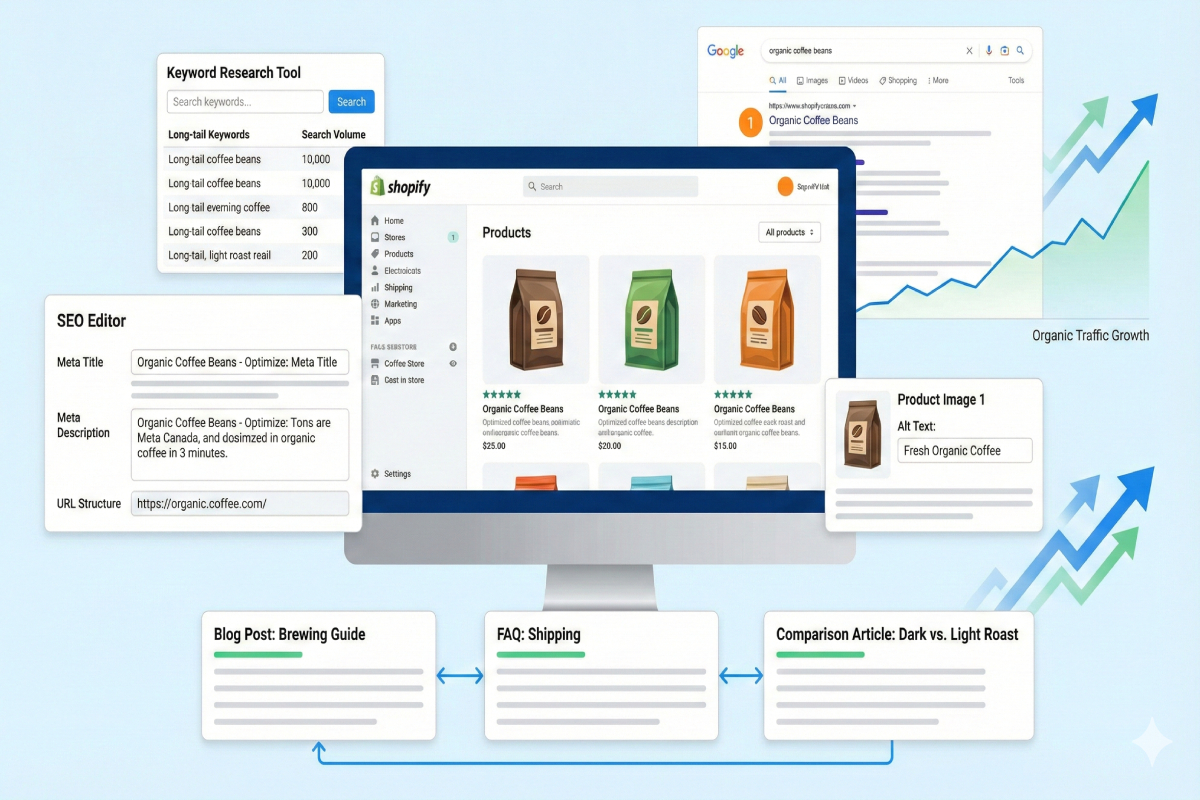
Through strategic SEO, a Shopify store can receive consistent organic traffic from those specifically looking to buy without paying for continual advertising.
- By doing your keyword research and learning what people type in when searching for your products and categories, you can include them naturally in headings, titles, descriptions, picture alt text & URLs.
- Publish posts that answer common questions in your industry with internal links to more relevant resources (e.g., FAQs, comparisons, how-tos, guides).
- Update meta titles and meta descriptions on all the most important pages, include key words and write compelling language to increase click through rates.
6. Build community and referral engines
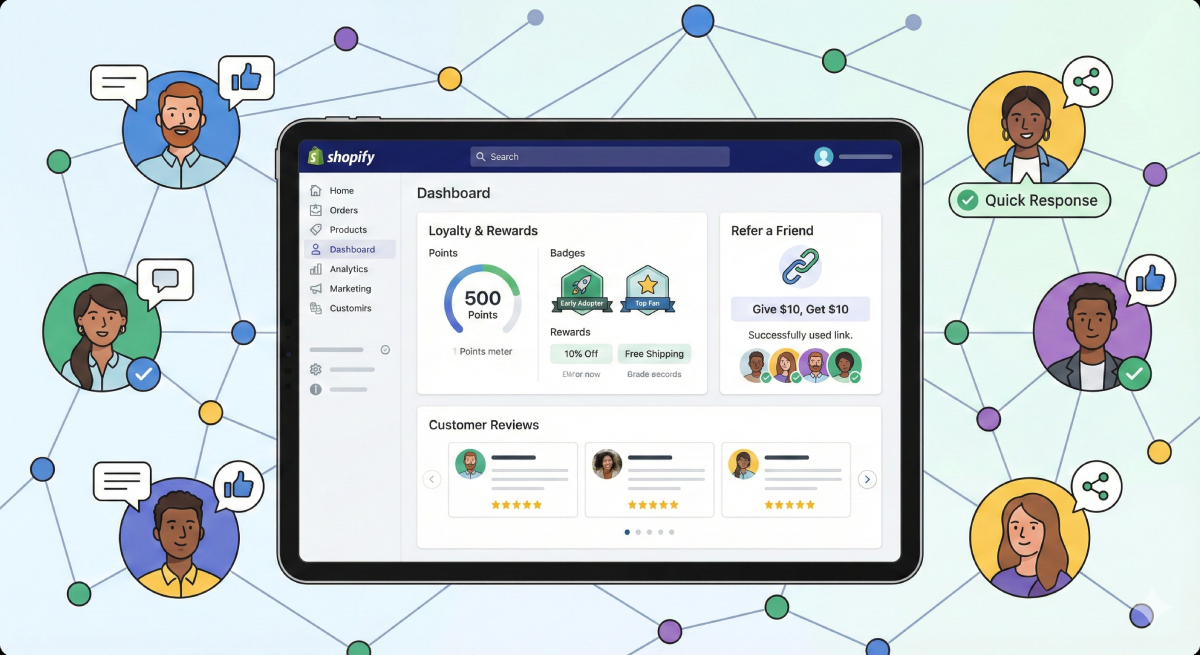
A Shopify shop can explode in growth thanks to word of mouth and a loyal fanbase.
- Create a rewards program that gives points, early access, or price cuts for loyal customers.
- Create a referral program that reduces the cost of acquisition by giving customers discounts for referring new customers.
- Post real client testimonials, engage with the social media your target audience is engaging in and respond to messages and comments quickly.
6. Analyze performance and iterate
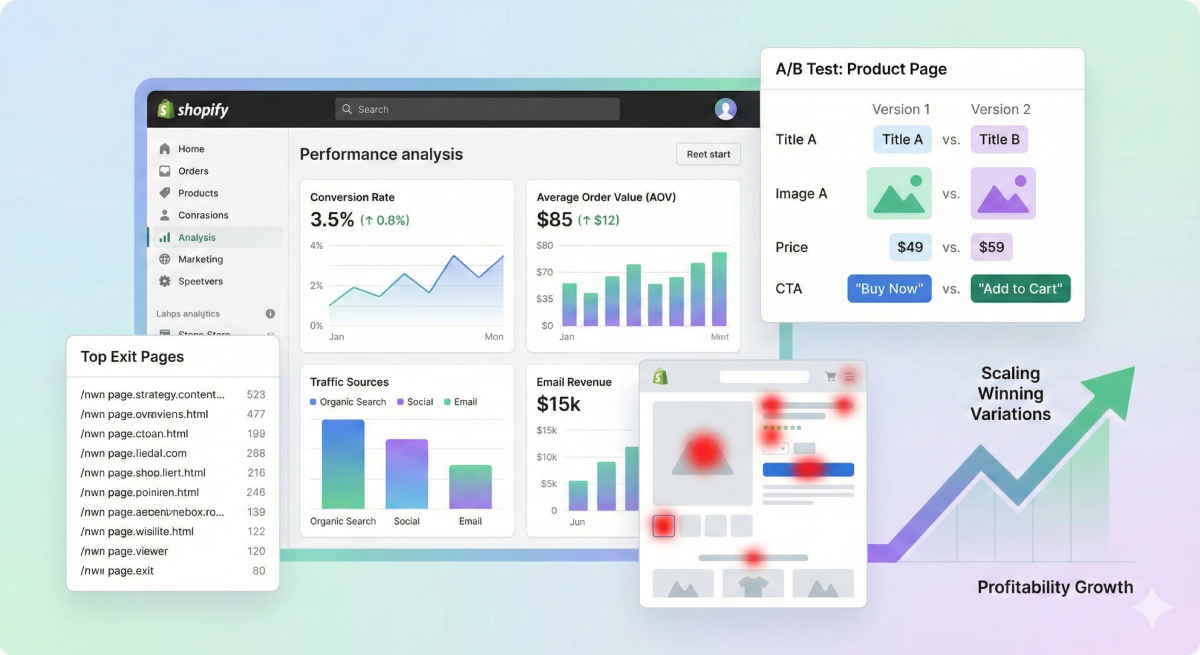
Because data-driven optimisation ensures your CRO and Shopify marketing never stop getting better.
- Leverage the Shopify Analytics and/or proprietary tracking apps like Google Analytics to track key metrics such as conversion rate, average order value (AOV), email revenues, traffic sources etcetera, top exit pages.
- Test product titles, photos, descriptions, prices and calls to action to uncover the variables that increase conversions. Then scale up the ones who are doing well.
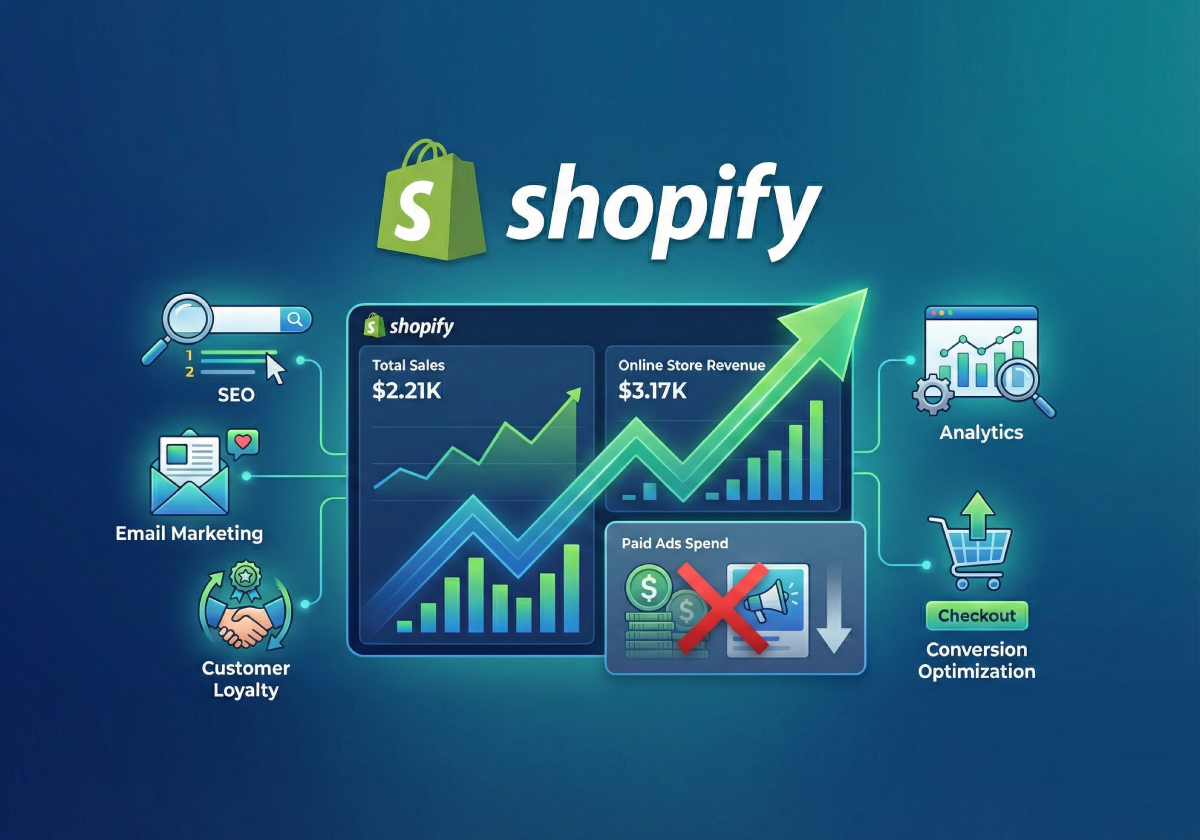
By using these tactics systematically, a Shopify store can increase its salvation and profit, reduce the dependence on paid ads while improving its brand and customer list.
7. Conclusion
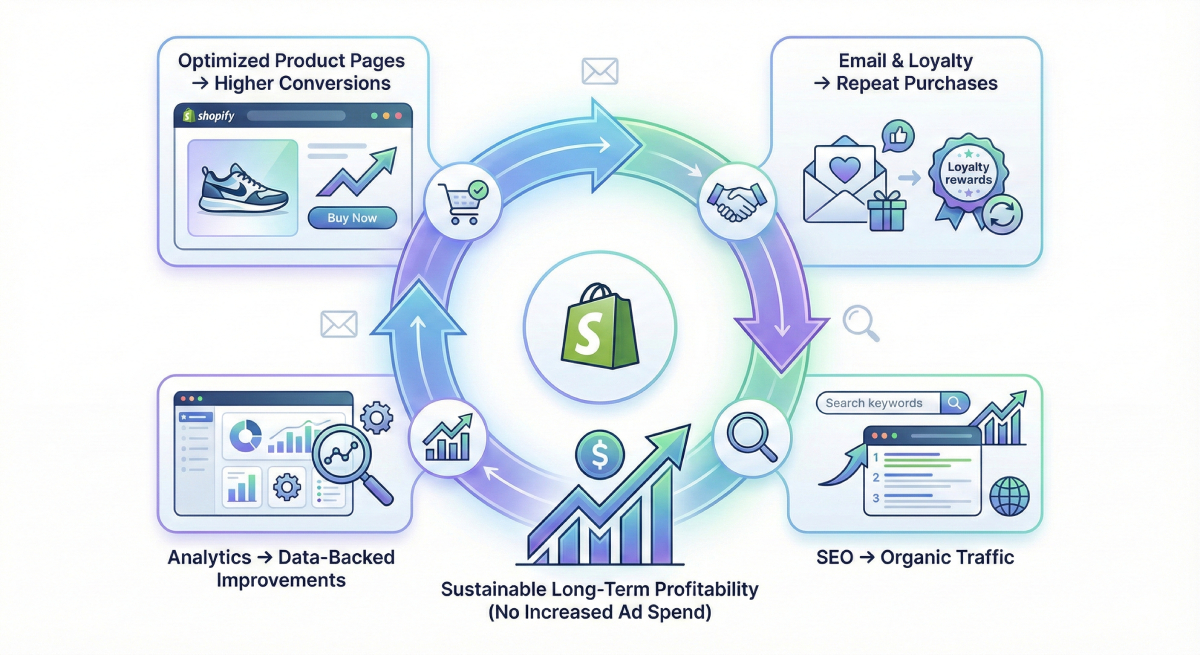
Using these Shopify optimization strategies produces a growth loop that keeps going: improved pages lead to more conversions, email and loyalty programs bring in repeat business, SEO brings in organic traffic, and data-backed improvements that build on each other over time. To achieve long-term profitability without increasing ad spending, begin with product page audits and a single email flow today, monitor metrics every week, and then move on to full-funnel enhancements. Execution is the key to your store’s potential; track, refine, and see revenue growth naturally.
Ready to turn your site into a lead-generating powerhouse?
Contact us today for a free Shopify Website Audit and get a step-by-step plan to grow your customer base.








Leave A Comment